Military in the Mojave
In 1850, southwestern territory was annexed by the U.S. Army, the beginning of military encroachment on the region.
New transportation routes were critical to an expanding nation, and a wagon trail was opened. In 1858, the first
wagon train en route to California was attacked when it lingered at the
Colorado River
crossing near present-day
Needles. Indian
fighters were sent to the area from San Francisco. Though there was no combat
and the
Mohave
claimed no responsibility for the wagon attack, prominent tribe members were jailed and the
army established
Ft. Mojave
at the crossing. When several Mohaves escaped from prison, soldiers hunted
them and others, eventually banishing the tribe from its homelands near the river crossing.
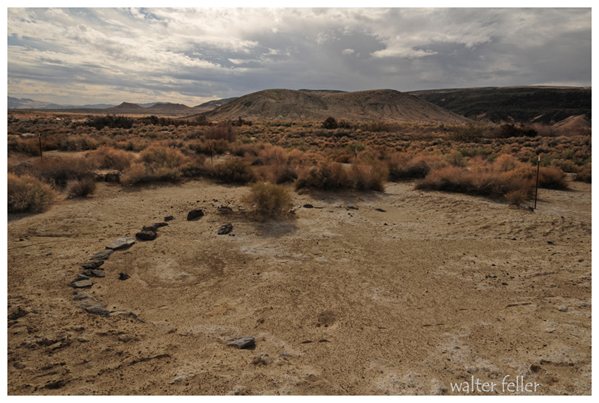
Remains of 19th century military redoubt at Bitter Springs (Fort Irwin)
The
Southern Paiute
were blamed for several murders in the
Mojave River
area. They were harrassing travelers and
stealing livestock. To thwart this practice and provide safe passage, the military established redoubts along the
Mojave Trail. After a short campaign led by
General Carleton,
peace was restored. The attacks and harrassment began again after the redoubts were abandoned and troops were sent
east to participate in the Civil War.
In 1865, the U.S. Government created the Colorado River Indian Reservation near Parker, Arizona, an area of poor
farmland. Favoring peace, the new Mohave chief guided hundreds to the reservation, while the former chief remained
to lead those who refused to leave their homeland; the tribe was effectively split into two. A compulsory
education law for Indians was passed, partly to eradicate native language and culture. The Mohaves were taught
American farming methods, though they had no railroads for work, others labored on riverboats, and some sold
crafts to tourists. During this same period the remaining
Chemehuevi
were forced onto reservations in California.
<< Previous -
Next >>
Contents & Introduction
-
Paleo-Indians
Desert Indians
Spanish Explorers
American Explorers
Pioneers
Military
Prospectors & Miners
Ranchers
Railroads
Homesteaders
Route 66 & Hoover Dam
Modern Communities