Sensitive Fish Species
With water in diminishing supply, desert fish species face great peril. In fact, more than half of the native desert
fish species in the Mojave are either federally listed as threatened or endangered or are species of concern. An
estimated eight percent are already extinct. Native desert fish often are specifically
adapted
to the heat and
elevated salinity of the water, particularly those species that evolved in small, isolated springs
The Devils Hole pupfish (Cyprinodon diabolis), whose entire population lives in one small spring-fed pool in Nevada,
has developed a physiology specifically adapted to the high temperature and salinity of this water. The
Ash Meadows National Wildlife Refuge
was created in 1984 to preserve the largest concentration of
endemic
plants
and
animals
in one location in the United States. Twenty-four species, including the
Devils Hole pupfish,
have adapted to this unique salty desert
environment
and are found nowhere else in the world.
Habitat restoration
efforts include converting concrete irrigation ditches back to their natural courses and removing
nonnative
tamarisk trees and crayfish.
River fish in desert areas are also in decline. For example, native fish of the
Colorado River,
such as the Colorado
squawfish (Ptychocheilus lucius) and razorback sucker (Xyrauchen texanus), have suffered population declines due to
dams that have altered the temperature and flow of the river. Introduced sport fish also outcompete these native species.
< Previous - Overview - Next >
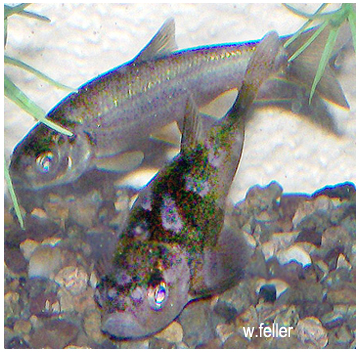
Mohave Tui Chub