Canterbury Bells
Phacelia campanulariaCanterbury Bells is a showy desert wildflower with deep blue, bell-shaped blooms that stand out vividly against the sandy soil. Native to the Mojave Desert, it’s a favorite among wildflower enthusiasts and one of the most striking flowers to appear during a strong spring bloom.
Appearance:
An annual wildflower that grows 6 to 12 inches tall. The leaves are broad, heart-shaped, and slightly toothed, often with a reddish tint. The flowers are rich, royal blue to violet, shaped like bells, and bloom in clusters at the top of the plant. Each bloom has a white throat and prominent stamens.
Habitat:
Thrives in sandy or gravelly soils, desert flats, washes, and open slopes. Native to the Mojave Desert, particularly in southeastern California.
Bloom Time:
Blooms from March to May, especially after good winter rains.
Pollinators:
Attracts bees and butterflies. Its bright color and open shape make it easy for pollinators to spot.
Note:
Though native to the desert, Canterbury Bells is sometimes grown in gardens for its bold color and beauty. It’s a true gem of the desert spring and often found blooming alongside poppies and lupines in superbloom years.
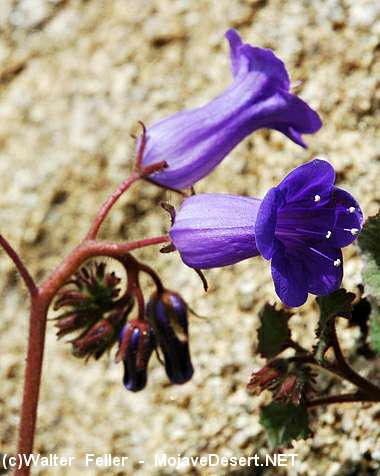
Bluebell Phacelia, Campanulate Phacelia
Also known as Desert Bluebell
Habitat; Washes and sandy areas below 4,000'.