-.-
Railroads of the Mojave Desert
The railroads of the Mojave Desert changed an isolated region into a transportation crossroads. Before the rails, travel depended on wagon roads, pack animals, military routes, river crossings, and scattered springs. Railroads brought heavier machinery, regular mail, passengers, supplies, and a practical way to ship ore, borax, salt, limestone, and other products to distant markets.The tracks did not cross the Mojave at random. Railroad builders used the same natural openings that had long guided travelers: Tehachapi Pass, Cajon Pass, the Mojave River corridor, the Colorado River crossing at Needles, and the broad basins between mountain ranges.
Entering the Desert
The first major rail approach came through Tehachapi Pass. In 1876, Southern Pacific completed its route through the pass, linking northern and southern California. Mojave began as a construction camp and became the western rail gateway for mining districts in the western Mojave, Owens Valley, and eastern Kern County.Mojave also became the railhead for Death Valley borax. From 1884 to 1889, twenty-mule teams hauled borax from Harmony Borax Works to the railroad loading point at Mojave. The wagons covered about 165 miles each way. This was an early example of how a railroad terminus could serve country far beyond its tracks. The second major entrance came through Cajon Pass. In 1885, the California Southern Railroad completed its connection from San Bernardino through the pass to Waterman Junction, soon renamed Barstow. This gave the Santa Fe system a route between Southern California and the trans-Mojave line.
Crossing the Mojave
In 1882 and 1883, Southern Pacific built east from Mojave to Needles on the Colorado River. The Atlantic & Pacific Railroad, backed by the Santa Fe, built west across Arizona toward the same crossing. The lines met at Needles in August 1883.The route crossed open desert basins, followed workable grades near the Mojave River, and passed through towns and service points including Daggett, Barstow, Ludlow, Cadiz, Fenner, Goffs, and Needles. These places were more than timetable stops. Steam locomotives needed water, fuel, repairs, telegraph service, and crews. Where traffic and water came together, towns could grow.
The San Pedro, Los Angeles & Salt Lake Railroad added a second major trans-desert route in 1905. Later part of Union Pacific, the Salt Lake Route crossed the Mojave through Cajon Pass, Barstow, the eastern desert, Kelso, and Cima on its way to Las Vegas and Salt Lake City.
Kelso was one of the most important operating points on that route. Heavy trains faced a long grade toward Cima and often needed helper engines. Steam locomotives also needed dependable water. The depot, engine facilities, eating house, and employee housing made Kelso a true railroad town.
Needles: Santa Fe's Gateway to California
In the early 1880s, Needles became the point where the Santa Fe system reached California but did not yet control its own route across the state. Southern Pacific had built east from Mojave to Needles, while the Atlantic & Pacific approached from Arizona.The lines met in 1883. Through passenger service from the East began that fall, but Santa Fe traffic initially depended on Southern Pacific track between Needles and Mojave. Santa Fe had reached California, but it did not yet have a fully independent route to Southern California.
This was the central railroad struggle. Southern Pacific had built its Mojave-to-Needles line in part to prevent a competing railroad from establishing a separate route across California. Santa Fe accepted the temporary arrangement, but continued to seek a route it could control.
That route came through Cajon Pass. In November 1885, the California Southern completed its line from San Bernardino through Cajon Pass to Barstow, where it joined the Santa Fe's trans-Mojave route. Santa Fe then had a direct connection between Southern California and the East without depending on Southern Pacific service beyond Barstow.
Needles was also a difficult physical gateway. The Colorado River crossing was vulnerable to floods, and early wooden railroad bridges failed more than once before a stronger steel bridge was completed in 1890. The town grew as a crew-change point, river crossing, and eastern entrance to the Mojave Desert.
Mining and Industrial Railroads
The main lines crossed the desert, but smaller railroads reached into its mining and industrial districts.The Waterloo Mining Railroad, also called the Calico Railroad, carried silver ore from the Calico district to the Waterloo mills near Daggett. The Borate & Daggett Railroad later replaced mule teams hauling borax from the Borate mines. The American Borax or Columbia Railroad served borate workings near Lead Mountain and shared part of the Calico-area rail system.
Other branch lines served copper, gold, salt, gypsum, limestone, and chemical operations.
The Ludlow & Southern served mines and mills near Stedman and Bagdad.
The Randsburg Railway connected Kramer with the Rand mining district and Atolia.
The Mojave Northern Railroad carried limestone from quarries northeast of Victorville to the cement plant at Leon.
The Trona Railroad connected Searles Lake chemical works with the regional railroad network.
The Tonopah & Tidewater ran north from Ludlow through Baker, Soda Lake, Tecopa, Shoshone, and Death Valley Junction toward the Bullfrog district.
The Nevada Southern, California Eastern, Ivanpah, and Barnwell & Searchlight lines tied eastern Mojave and Nevada-border mines to major railroads.
Many of these lines were short lived. A mine could close, ore prices could fall, or truck freight could become cheaper than maintaining track across the desert. Yet their grades, sidings, trestles, depots, and abandoned roadbeds remain part of the Mojave landscape.
The modern Calico & Odessa Railroad should be treated separately. It is an interpretive tourist railroad built during the Walter Knott restoration era, not a surviving mining railroad on the original historic alignment.
Railroads, Water, and Towns
Water determined much of the railroad geography. Stations were placed where steam locomotives could take water, where crews could work, and where freight could be transferred. Springs, wells, riverbed water, and storage tanks helped determine the importance of Mojave, Daggett, Barstow, Ludlow, Kelso, Goffs, and Needles.Barstow became the central operating city of the Mojave railroad system. Its yards, shops, roundhouse, maintenance work, crew changes, and freight operations gave it a role larger than most nearby desert towns.
Daggett served as the Calico and Borate supply and shipping point. Rail freight reached Daggett, then moved north by wagon, stage, or narrow-gauge railroad to the mining districts. When silver declined, borax kept the connection important.
Railroad stations also supported eating houses, hotels, blacksmith shops, telegraph offices, stores, and repair shops. The Casa del Desierto at Barstow, El Garces at Needles, and Kelso Depot remain as major reminders of this working railroad world.
Legacy
Railroads helped establish the corridors later followed by highways, pipelines, power lines, and interstates. The Mojave Road, National Old Trails Road, Route 66, Interstate 15, and Interstate 40 all reflect the same practical geography of passes, water, grades, and open desert basins.Many branch lines have disappeared, but the main corridors remain active. BNSF freight trains still use the old Santa Fe route across the Mojave, while Union Pacific trains continue through Kelso and Cima. The Mojave Northern Railroad remains an industrial line serving quarry and cement operations.
The railroad story is not only about trains. It is the story of how the Mojave became connected: how mines reached markets, how towns gained supplies and people, and how a desert once crossed by wagon roads became part of a national transportation system.
Related Pages
Cajon Pass and Cajon Summit
Mojave
Barstow
Daggett
Calico
Afton Canyon
Helendale
Needles and El Garces
Kelso Depot
Mojave Northern Railroad
Borate & Daggett Railroad
Tonopah & Tidewater Railroad
Railroad Depots, Stations, and Eating Houses
References
Hensher, Alan, and Larry M. Vredenburgh. Ghost Towns of the Upper Mojave Desert, Volume I: San Bernardino County. Preliminary draft, 1986.Myrick, David F. Railroads of Nevada and Eastern California.
Vredenburgh, Larry M., and Gregg Wilkerson. Railroads and Mining in the Mojave Desert and Southwestern Great Basin, California and Nevada.
National Park Service. "Kelso Depot." Mojave National Preserve.
California Office of Historic Preservation. Tehachapi Loop and 20-Mule-Team Borax Terminus historical markers.
Atlantic and Pacific Railroad records, 1887-1893. Online Archive of California.
Railroads of the Mojave Desert
The railroads of the Mojave Desert tell the story of how steel tracks transformed an isolated land into a crossroads of commerce, mining, and migration. From the first transcontinental lines in the late 1800s to the web of mining railroads that followed, trains carried borax, copper, and gold out of remote camps and brought supplies, workers, and settlers in. Towns like Barstow, Daggett, and Kelso grew as rail hubs, while desert outposts flourished briefly on the promise of ore. Though many lines vanished, their traces still shape the Mojave's history and landscape.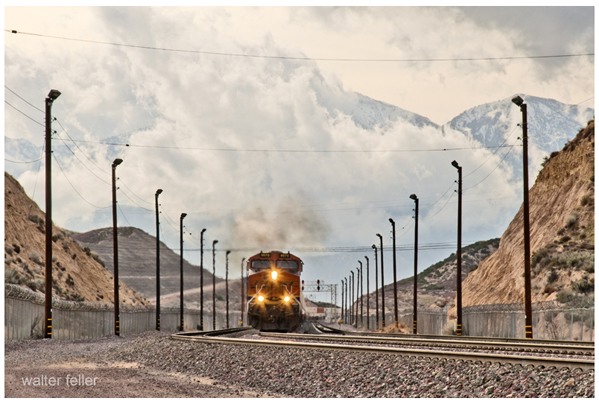
Cajon Summit
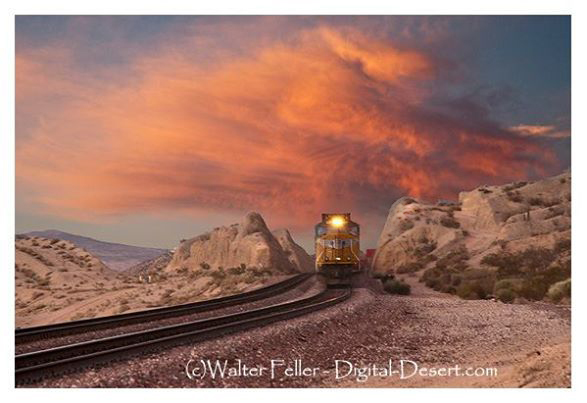
Helendale
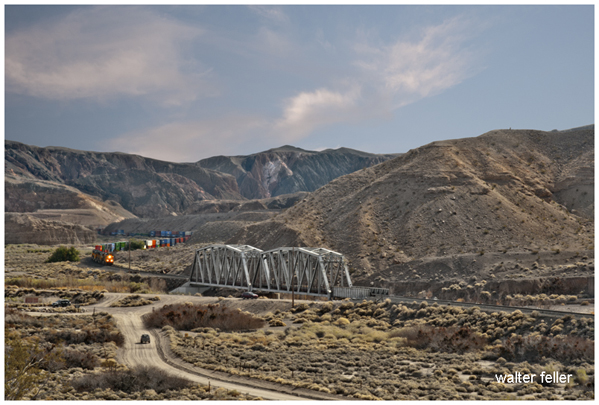
Afton Canyon
Atlantic & Pacific Railroad
Barnwell - Searchlight
Calico - Odessa
Borate & Daggett
California Eastern Railroad/Railway
California Southern Railway
Carson and Colorado Railroad
Las Vegas & Tonopah
Ludlow and Southern
Nevada Southern Railway
Randsburg Railway
Santa Fe Railroad (Santa Fe Railway)
Southern Pacific
Southern Pacific - Jawbone
Tonopah & Goldfield
Tonopah & Tidewater Railroad
San Pedro, Los Angeles and Salt Lake Railroad
Bullfrog Goldfield
Yellow Pine Railroad
Death Valley Railroad
-
Kelso Depot
Casa del Desierto
Garces Harvey House
Railroads around the Mojave National Preserve
Defying Death Valley
Railroad Depots, Stations & Eating Houses
History of Transcontinental Railroading in Arizona, 1878-1949