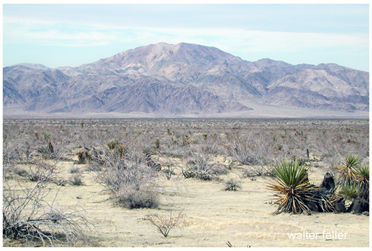
The Colorado Desert
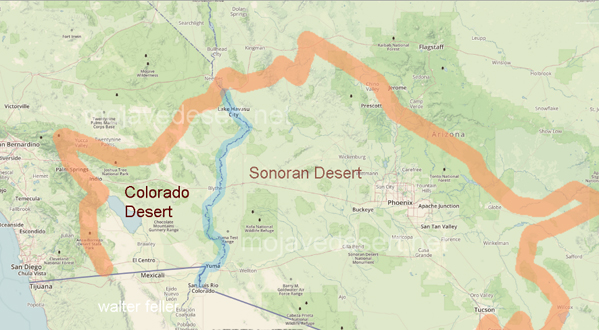
The Colorado Desert is a portion of the larger Sonoran Desert lying in the lower Colorado River Valley of southeastern California. Most of the Colorado Desert lies between sea level to 3,000 feet elevation, with a low point of 275 feet below sea level in the Salton Trough and high peaks reaching nearly 10,000 feet. Encompassing approximately 7 million acres, the Colorado is lower, flatter, and warmer than the Mojave (Hickman, 1993). The Colorado Desert’s latitude, low elevation, and proximity to the sea give it a more subtropical desert climate with infrequent freezing temperatures. With precipitation blocked by the Peninsular Range, a meager 2–3 inches of rain falls on the Colorado River Valley. Most of it comes in winter, but the summer monsoonal rains off the Gulf of Mexico and Gulf of California through Arizona and Mexico spill over into this region and can account for roughly half of the annual precipitation (Spellenberg, 2002). Summer temperatures can exceed 120 degrees Fahrenheit and the growing season lasts from 250 to 350 days.
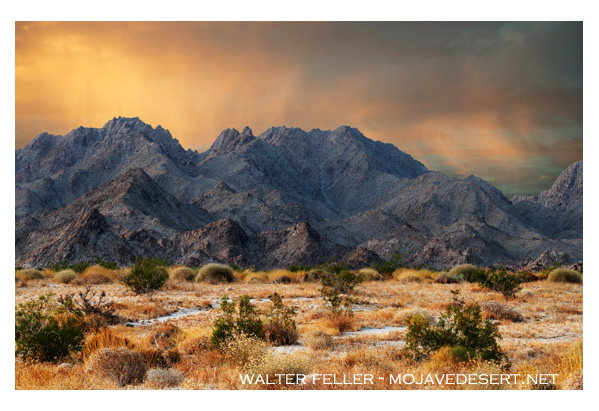
Cacti and succulents are common throughout the greater Sonoran Desert, but southeastern California is too hot and dry to support the large columnar cacti such as saguaro (Carnegia gigantean) that characterize the landscapes of Arizona (as an exception, a few populations occur near the Colorado River). Trees in the legume family such as honey mesquite (Prosopis glandulosa) and smoketree (Psorothamnus spinosus) are also common throughout the greater Sonoran Desert, but in California are restricted to watercourses. Ocotillo (Fouqueria splendens) is often considered an indicator species for the Colorado Desert. Other indicators for the Colorado Desert include catclaw (Acacia greggii) and palo verde (Cercidium microphyllum) (MacMahon, 2000).
Previous - Next